

Youth Ministry Hints, Youth Ministry Thoughts
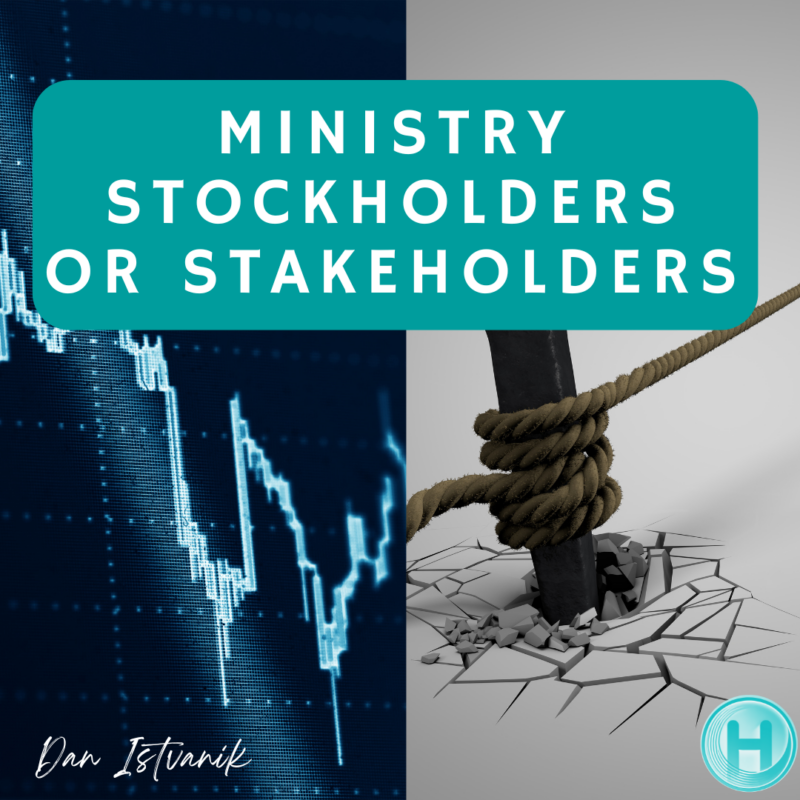
Ministry Stockholders vs. Stakeholders
Sep
Stockholders vs. Stakeholders in the Church: Why the Difference Matters in Ministry
In the world of business, the terms stockholder and stakeholder sound similar, but they have very different meanings. Let me be clear, while the church isn’t a corporation, this distinction can actually help us think more clearly about how we lead, serve, and make decisions in ministry.
What’s the Difference?
-
Stockholders: In a company (and the church), stockholders (or shareholders) are people who own shares. They’ve invested financially and expect a return. Their primary concern is often the value of their investment—profits, growth, and stability.
-
Stakeholders: Stakeholders are anyone who is impacted by what the organization does—customers, employees, suppliers, the community, and beyond. They may not own a piece of the company, but they are deeply connected to its purpose and outcomes.
When we bring this language into the church, it creates an important leadership question:
Are we leading as if people are stockholders who “own” a piece of the church, or as stakeholders who are entrusted with its mission?
The Problem with a “Stockholder” Mentality in the Church
When churches (and any ministries) unintentionally operate with a stockholder mindset, we can start treating ministry like a spiritual investment portfolio:
-
Preference over mission: “I give here, so my preferences should shape what happens here.”
-
Control over calling: “I’ve invested time, money, and history, so I get to decide where this ministry goes.”
-
Ownership over stewardship: The focus shifts from God’s ownership of the church to human control of it.
Does this sound familiar?
This mindset often leads to decision-making that protects comfort zones rather than pursuing God’s calling. It can reduce the church to a service provider rather than a mission-centered body.
Embracing a “Stakeholder” Mindset
A stakeholder approach reframes the conversation: we are all participants in God’s mission, not owners of it. Everyone—members, leaders, volunteers, neighbors, and even those who haven’t yet walked through the church doors—is impacted by how we live out the gospel.
Stakeholder thinking asks:
-
Who is affected by what we do?
-
How do our decisions advance God’s kingdom and the Gospel, not just serve the people already here?
-
Are we stewarding resources for the flourishing of our local community and the glory of God?
In this view, giving, serving, and leading aren’t about buying influence or preserving personal comfort—they’re about aligning with Christ’s mission and blessing others.
Practical Shifts for Ministry Leaders
-
Language of stewardship, not ownership
Use words that remind people the church belongs to Christ. Replace “our church” in the possessive sense with “the church God has entrusted to us.” -
Broaden the table
Involve voices from different age groups, backgrounds, and community contexts. Ask how decisions will impact those outside the current membership. -
Measure mission impact, not member satisfaction
Evaluate ministries based on how they fulfill your gospel calling—not just how they please the people funding or participating in them. -
Teach that investment is kingdom-oriented
Financial gifts, time, and energy are not stocks to manage but seeds to plant—invested in people, discipleship, and God’s kingdom work.
The Bottom Line
In the church, no one “owns” shares. We are all stewards of grace (1 Peter 4:10), entrusted with the mission of God. Seeing ourselves as stakeholders rather than stockholders shifts our posture from control to calling, from self-interest to kingdom-interest, and from preservation to multiplication.
The church is not a company; it’s the living body of Christ. But sometimes a business concept helps us see our blind spots—and this one is worth taking seriously.